By Brad D. De Young
Michigan Watershed Watch | The Kayaker's Journal
Michigan's largest river hydroelectric dam has officially been downgraded to poor condition by federal regulators. Yet as questions about its structural deficiencies grow, the future of the dam, the reservoir it creates, and the communities built around it are becoming entangled in a controversial corporate sale.
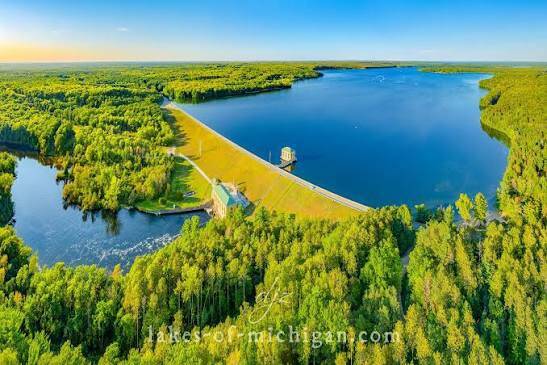
The facility is Hardy Dam on the Muskegon River in Newaygo County. At 95 years old, this massive hydroelectric structure is facing a problem that has been known for more than a decade: its auxiliary spillway is not large enough to safely pass an extreme flood under modern federal safety standards.
On November 4, 2026, the Federal Energy Regulatory Commission (FERC) filed a new inspection assessment officially listing Hardy Dam in "poor" condition under the National Inventory of Dams rating system.
That represents a downgrade from its previous satisfactory classification.
This is not an insignificant administrative change. It is an official federal assessment of an aging, high-hazard dam whose owner has identified a spillway reconstruction project estimated to cost approximately $350 million.
And the timing could hardly be more consequential.
A known safety deficiency — more than a decade in the making
The problem at Hardy Dam is not new.
A 2014 inspection identified concerns that the dam's existing spillway could not safely accommodate what engineers call the probable maximum flood — the largest flood considered physically possible at a particular location.
In other words, the infrastructure designed to safely release excess water during an extreme flooding event does not meet current standards.
Hardy is classified as a high-hazard potential dam. That designation means a failure could result in loss of life or significant downstream consequences. It does not mean failure is imminent, but it underscores the seriousness of getting the necessary safety work completed.
FERC approved modifications to Hardy's spillway and amended its hydroelectric license in May 2024. However, the project has yet to move into construction.
Instead, the estimated $350 million reconstruction has become tied to a much larger dispute over the proposed sale of Consumers Energy's Michigan hydroelectric fleet.
The question is no longer simply when Hardy's spillway will be repaired.
It is who will own the dam, who will pay for the work, and what happens if the proposed transaction falls apart.
$350 million in repairs — or a future without Hardy Pond?
Consumers Energy is seeking approval to sell Hardy Dam and 12 other Michigan hydroelectric facilities to Confluence Hydro LLC, a company created by Maryland-based private equity firm Hull Street Energy.
Consumers has requested permission to delay the Hardy spillway construction schedule until the end of 2028 while the proposed sale and federal licensing process move forward.
The utility says that if regulators approve the transaction, construction would begin after the necessary approvals are secured.
But there is another side to this story.
Consumers has made it clear that if Michigan regulators reject the sale, it does not intend to proceed with the spillway project under its current ownership plan.
Instead, the utility says it would not refill Hardy Pond next spring and would pursue decommissioning as its next lowest-cost option.
That is an extraordinary position for a utility that has operated these facilities for generations.
The future of a major Michigan river, a massive recreational reservoir, and the surrounding communities is now being presented as dependent on whether a proposed corporate transaction receives regulatory approval.
Consumers spokesperson Brian Wheeler stated:
"If state regulators do not approve the sale, we will not raise the pond's water levels in the spring and the spillway project will not proceed."
The implications extend far beyond the generating station.
Hardy Pond encompasses approximately 4,000 acres and supports boating, fishing, camping, tourism, marinas, and other recreational businesses. The Dragon mountain biking trail and surrounding outdoor recreation economy are also connected to the reservoir landscape.
For communities that have invested in the reservoir economy, the uncertainty is enormous.
But there is an important distinction that should not be lost: protecting local economies and protecting public safety are both legitimate concerns. Neither should be used to avoid an honest discussion about the long-term costs and consequences of maintaining aging dams.
The public deserves more than assurances
Consumers Energy maintains that Hardy Dam remains safe to operate.
The company says it has extended the winter drawdown and improved the reliability of passing water through the powerhouse to reduce risk.
FERC says it continues monitoring the facility and evaluating whether additional risk-reduction measures are necessary.
However, the detailed inspection report underlying the new rating has not been publicly released because hydroelectric dam safety information is classified.
That leaves important questions unanswered.
What specific deficiencies contributed to the poor rating? Does the assessment identify concerns beyond the already documented auxiliary spillway problem? Has the risk profile changed? What safeguards are in place while the permanent reconstruction remains delayed?
FERC has not publicly confirmed whether the downgrade reflects any additional deficiencies beyond the spillway issue.
These are reasonable questions, particularly for people living and working downstream.
The public should not be expected to confuse an assurance that a dam is currently operating with confirmation that its long-term structural deficiencies have been resolved.
Those are two very different things.
A private equity transaction with public consequences
The proposed sale raises questions that extend beyond Hardy Dam.
Consumers Energy wants to transfer ownership of 13 hydroelectric facilities to Confluence Hydro. Under the proposed arrangement, Consumers would continue purchasing the electricity, generating capacity, and renewable energy credits produced by the facilities through a 30-year power purchase agreement.
The proposed agreement begins at approximately $160 per megawatt-hour, with annual escalations and adjustments associated with major capital investments.
Consumers and Confluence argue the transaction represents a way to preserve Michigan's hydroelectric facilities, maintain the reservoirs, and provide the necessary capital for major improvements.
Critics see a different set of risks.
Opponents argue the arrangement could lock utility customers into decades of above-market electricity costs while transferring ownership of aging infrastructure to a private equity-backed company.
The central issue is accountability.
Who ultimately bears responsibility when these facilities require hundreds of millions of dollars in repairs? What happens if projected revenues fall short? What protections exist for downstream communities? And what guarantees will ensure that promised safety investments actually happen?
Confluence spokesperson Natalie Joubert says the company understands the investments Hardy requires and remains committed to making the necessary improvements if the sale is approved.
That commitment is important. But commitments and completed construction are not the same thing.
Michigan regulators must examine the actual financial, operational, and safety obligations being transferred — not simply the assurances being made by the parties seeking approval.
The river cannot be reduced to a balance sheet
There is another part of this discussion that deserves considerably more attention.
Michigan's rivers are public natural resources. Their value cannot be measured exclusively in megawatts, reservoir acreage, property values, or recreational revenue.
Dams fundamentally alter river ecosystems. They interrupt fish migration, fragment aquatic habitat, change water temperatures, trap sediment, and transform flowing rivers into impoundments.
For decades, Michigan's rivers have been managed around these structures. Entire communities have developed recreational economies around the reservoirs they create.
But that history does not eliminate the environmental costs, nor does it establish that every aging dam should automatically be preserved.
The decision surrounding Hardy should include a serious examination of all available alternatives: rebuilding the spillway, maintaining appropriate reservoir levels under interim safety measures, considering long-term ownership responsibilities, and evaluating the environmental consequences of eventual decommissioning.
Dam removal is not without consequences, particularly for communities and established reservoir ecosystems. But neither is indefinite maintenance of aging infrastructure without a sustainable financial and safety plan.
The discussion must be based on engineering, environmental science, transparent financial analysis, and the public interest.
Not simply the economics of a proposed sale.
December 17 could determine Hardy's future
The Michigan Public Service Commission is approaching a critical decision.
Commissioners have given Consumers Energy and the other parties until December 9 to submit a settlement or demonstrate majority support for another extension.
Otherwise, the commission has indicated it expects to issue a final decision on December 17, 2026.
That decision could shape the future of Hardy Dam and 12 other hydroelectric facilities across Michigan.
For residents downstream, property owners, outdoor recreation businesses, anglers, paddlers, and anyone who values the Muskegon River, the stakes are substantial.
Hardy Dam is nearly a century old. Its spillway deficiency has been documented for more than a decade. Federal regulators have now downgraded its condition to poor. The permanent safety improvements carry an estimated price tag of $350 million.
These facts should command serious public attention.
Michigan cannot afford to treat dam safety as a bargaining chip in a corporate ownership dispute.
Nor should communities be forced to believe that their only choices are accepting a private equity transaction or watching a reservoir disappear.
There needs to be a credible, transparent, long-term plan for Hardy Dam — one that puts public safety first, establishes financial accountability, protects communities from being abandoned, and recognizes the Muskegon River as more than an asset on a corporate balance sheet.
The Muskegon River will outlast Consumers Energy, Confluence Hydro, and every corporation that has profited from its power. The responsibility to protect the river, the people downstream, and the communities built around it must outlast them, too.
Michigan Watershed Watch
Protecting Michigan's rivers through public awareness, environmental reporting, and advocacy.
Brad D. De Young
Michigan Watershed Watch | The Kayaker's Journal
Founder, West Michigan Kayaking Club
Source: Reporting by Garret Ellison, MLive, November 21, 2026. Information regarding the federal inspection assessment, Consumers Energy's statements, the proposed hydroelectric sale, and the Michigan Public Service Commission proceeding is attributed to the reporting and statements described above.
Add comment
Comments