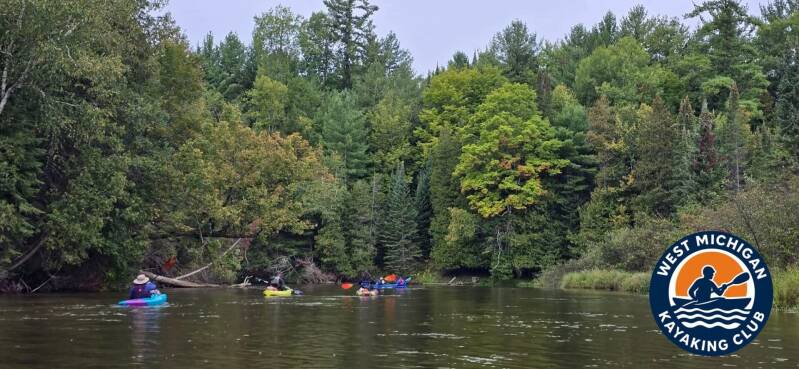
Thanksgiving week asks a simple question: what made the year richer? For anyone who has spent meaningful time in West Michigan kayaking country, rivers belong near the top of the answer. They gave us reasons to leave the house, places to learn, mornings that began with mist, afternoons measured in bends and bridges, and evenings when nobody was in a hurry to load the boats. A river does not ask much in return for all that. It asks us to show up prepared, pay attention, and leave it healthy for the next person.
This gratitude list is not for one perfect trip or one favorite stretch. It is for the whole living system that makes paddling possible: moving water, public access, changing seasons, reliable companions, hard lessons, and the shared responsibility of caring for places we love. A club can organize the calendar, but the river provides the reason to gather. Fellow paddlers turn a route into a memory. Access points connect home to water. Stewardship connects this year's gratitude to next year's opportunity.
Thankful for Water That Keeps Moving
A river is never exactly the same place twice. Rain changes its pace. Snowmelt changes its voice. A fallen tree creates a new line, a gravel bar invites a pause, and the light turns an ordinary corridor into something worth remembering. That movement is part of the gift. Paddling teaches patience because the river sets terms no calendar can control. We can plan a meeting time and a take-out, but the water brings its own weather, current, wildlife, and surprises.
We are thankful for rivers that challenge us without needing to be dramatic. A familiar local run can teach a new paddler how to read current. A longer river day can remind an experienced paddler that comfort is earned through preparation. Quiet water gives families and beginners room to build confidence. Moving water asks for focus, humility, and teamwork. Every kind of river has something to teach, and the lesson changes with the season.
We are also thankful that a river cannot be fully known from a screen. Maps and written guides matter, and preparation matters, but the real place still requires presence. You have to feel the wind, hear the birds, watch the current gather around a bend, and notice how the shore changes after rain. The river rewards people who slow down enough to observe it rather than merely pass through it.
Thankful for Public Access
Behind every uncomplicated launch is a piece of work somebody did: a site was protected, a parking area was maintained, a path was kept open, or a public shore remained available for people arriving with boats on their roofs. Access can look ordinary — a gravel lot, a sign, a short carry, a dock, or a bridge-side opening — but without it, even the most inviting river can remain out of reach.
We are thankful for the public lands and waters that connect communities across Michigan. We are thankful for state, county, township, and municipal access sites, for national forest shores, and for the agencies and staff who manage them. The Michigan Department of Natural Resources is one important source for state boating rules, public access information, and outdoor recreation resources. Rules and site conditions vary by place and manager, so checking ahead is part of being a considerate visitor.
Access is also a shared inheritance. Someone before us valued these rivers enough to protect a way in. Someone after us will arrive with a first boat, a child in a properly fitted life jacket, or a friend who needs a quiet hour outdoors. Keeping launches usable and welcoming is one way gratitude becomes practical. Respect posted rules, stay within public boundaries, give private landowners their privacy, and make room for anglers, hikers, birders, and other paddlers. A launch is a small shared space, and courtesy there sets the tone for the whole day.
Our Lower Peninsula River Guides gather many of the rivers our members return to, while the Upper Peninsula River Guides point north to a wilder-feeling side of Michigan paddling. Together they represent countless individual access points and countless acts of care by people we may never meet. That is worth a moment of thanks before the first stroke.
West Michigan Kayaking Gives Us More Than One Kind of River Day
One reason gratitude comes easily here is variety. West Michigan kayaking can mean a short local outing fitted between work and dinner or a full weekend built around camp cooking and a long shuttle. It can mean the broad presence of the Grand, the promise of a northern river road trip, or a quiet tributary where the trees lean close and the day narrows to birdsong and current. The water changes; the invitation remains.
We are thankful for spring's energy, even when it demands caution and cold-water judgment. We are thankful for summer's long light and full calendars, for fall color reflected in slow pools, and for the clear, bracing days that remind us why layering systems and warm drinks matter. We are thankful for rivers near home that make an ordinary week feel larger, and for distant rivers that turn a weekend into an expedition.
That variety also gives paddlers a path. A person can begin on forgiving water, learn beside patient companions, and gradually prepare for longer days, different conditions, and overnight travel. There is no need to rush that progression. The next challenge will still be there when the skills are ready. A river region this rich lets people grow at an honest pace while never running out of places to explore.
Thankful for the People in the Other Boats
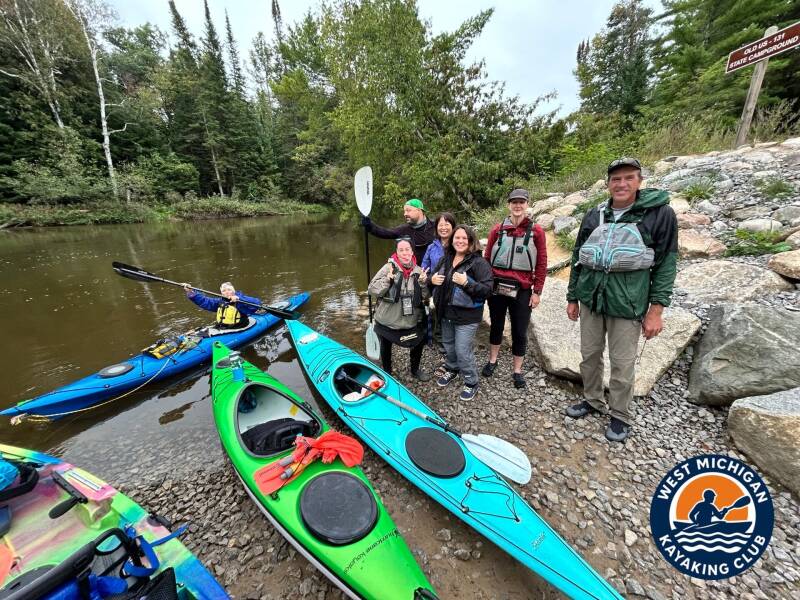
A club paddle is built from more than boats and a route. It is built from the driver who makes the shuttle work, the person who checks that a new member has the essentials, the paddler who carries an extra layer, and the friend who notices when someone is tired before that person has to ask for help. It includes the quiet competence of experienced members and the good questions of people who are new enough to remind everyone why they started.
We are thankful for members who understand that skill and generosity belong together. They share what experience has taught them without turning a river day into a lecture. They encourage without pressuring. They wait at the right moments, speak clearly when conditions require it, and know that confidence grows fastest when people feel both challenged and supported.
Gratitude sounds like a shuttle ride
Some of the year's richest conversations happen before anyone launches. They happen while straps are tightened, maps are checked, and vehicles are rearranged. They happen at lunch stops, around camp kitchens, and on the drive home, when the day is retold while it is still fresh. A river creates the setting, but people create the fellowship.
We are thankful for the members who arrive early, stay to help load, and treat every participant's safety as part of the shared work. We are thankful for families who trust the group with their time, for friends who invite friends, and for new faces who become familiar by the second bend. A membership list can count names. Only time on the water reveals what a community is.
Thankful for the Hard Days, Too
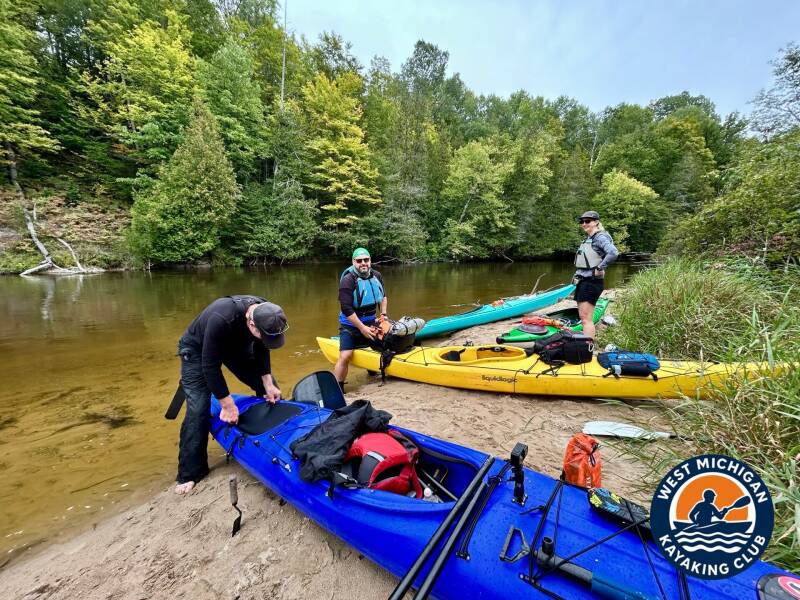
Not every meaningful river day is easy. Wind can turn a pleasant plan into a workout. Rain can test clothing choices. A route can take longer than expected, and a small mistake can become a lesson everyone remembers. We are not thankful for danger, and no one should romanticize poor judgment. But we can be thankful for what honest difficulty teaches when a group responds with preparation, patience, and care.
Hard days teach us to check conditions instead of assuming them. They teach us why a trip plan belongs with someone on shore, why a life jacket must be worn rather than carried, and why turning back can be the strongest decision of the day. They reveal who stays calm, who adapts, and who looks after the group without being asked.
Those lessons make the good days better. They deepen respect for the water and for each other. Gratitude that only counts sunshine is fragile. Gratitude that includes the lessons is durable.
Giving Something Back to the Water
Thanks should change behavior. Rivers do not need grand speeches from paddlers; they benefit from steady habits repeated by many people across many trips. Giving back begins with the simplest rule: leave every launch and lunch stop cleaner than you found it. Carry out everything you brought in. When it is safe and practical, pick up litter left behind by someone else. A small bag takes little room in a boat, and a clean bank is a visible form of respect.
Small habits with a long reach
Respect the shore as carefully as the channel. Launch and land in designated or durable places when they are provided. Avoid trampling fragile banks and vegetation. Give wildlife space. Keep soap, food scraps, and waste out of the water. Follow the access manager's rules for parking, camping, fires, and disposal, because those details vary from site to site.
Giving back can also mean helping the next paddler have a responsible day. Share accurate information. Do not oversell your experience or undersell a hazard. Mention a changed access condition through the proper channel when you notice one. Welcome new people while helping them understand preparation, local rules, and the responsibility that comes with shared access.
Stewardship is not separate from adventure. It is how adventure remains possible. Public access depends on public trust, and that trust is strengthened every time a paddler parks considerately, respects a boundary, cleans a site, and leaves wildlife undisturbed. We cannot control every pressure a river faces, but we can control the trace left by our own boats.
A Short List to Carry Into Next Season
This Thanksgiving, we are thankful for headwaters and take-outs, for public launches and forested banks, for patient teachers and dependable shuttle drivers. We are thankful for warm meals after cold miles, for quiet bends that reset a busy mind, and for companions who make even a familiar river feel newly worth exploring. We are thankful for the Grand running through our home city and for every Michigan river that gives a weekend its direction.
Most of all, we are thankful that gratitude does not have to end at the table. It can ride in the boat. It can look like preparation, courtesy, restraint, and care. It can sound like a simple promise: we will enjoy these rivers as fully as we can, and we will do our part to pass them on in good condition.
The water has given us another year of places to go and people to go with. That is no small gift.
Explore Michigan with West Michigan Kayaking Club
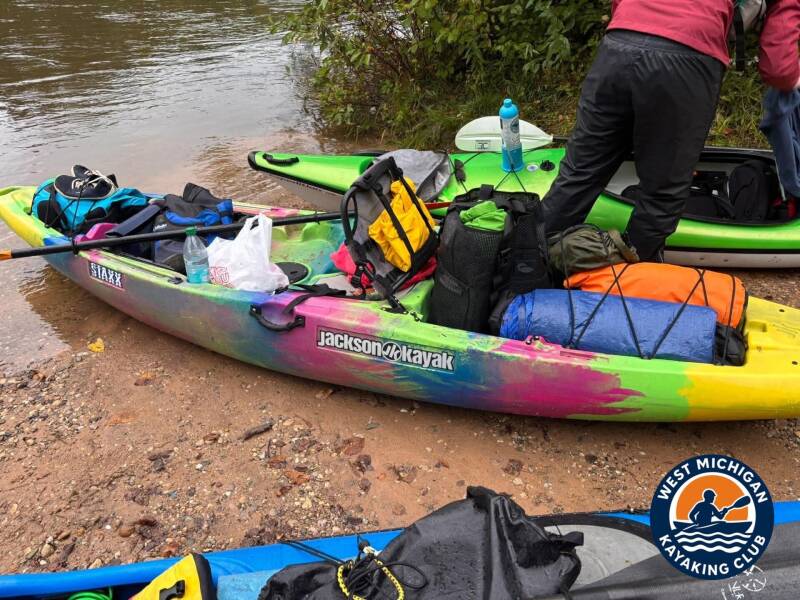
Looking for more than an occasional paddle? Join the West Michigan Kayaking Club, a Grand Rapids-based outdoor adventure community exploring Michigan's rivers, lakes, trails, and wilderness.
Our adventures include active day paddles, multi-day river expeditions, kayak camping, hiking, backpacking, cycling, and outdoor exploration.
We believe in getting out there, covering miles, and discovering what's around the next bend.
Wild Rivers. Rugged Trails. Real Adventure.
Membership is free. There are no dues or membership fees.
Website: https://www.westmichigankayakingclub.com
Become a member: https://www.westmichigankayakingclub.com/become-a-member
Facebook community: West Michigan Kayaking Club
---
By Brad De Young | Co-Founder, West Michigan Kayaking Club
The Kayakers Journal
Add comment
Comments