By Brad D. De Young
The Kayaker's Journal | Outdoor Recreation & Community
Grand Rapids continues to take steps toward becoming a more accessible and outdoor-friendly city, and a new bicycle infrastructure project planned for Mount Vernon Avenue is another encouraging development.
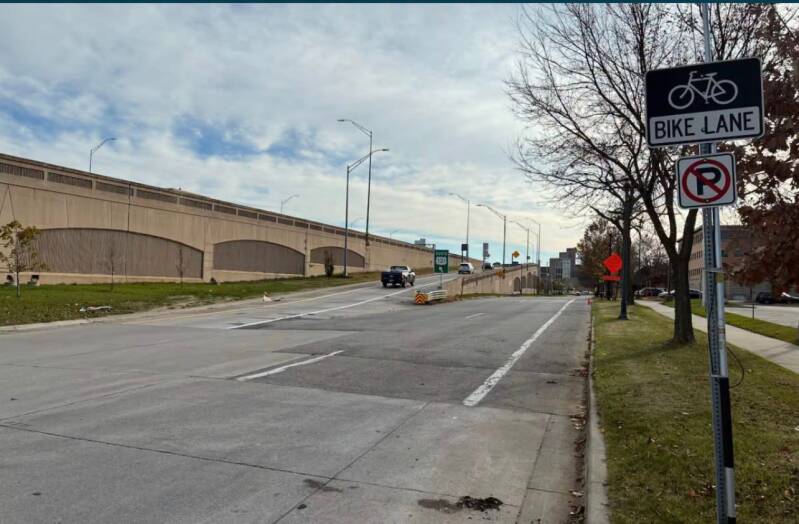
According to a November 19, 2026, report by MLive, new protected bicycle lanes are planned for a section of Mount Vernon Avenue near U.S. 131. The improvements are expected to help connect downtown Grand Rapids, the Blue Bridge, Grand Valley State University's downtown campus, and the new soccer stadium scheduled to open in 2027.
The project represents more than just another painted bicycle lane. Plans call for physically separated bicycle facilities, providing additional protection for cyclists traveling through an increasingly active part of the city.
Building a Better Connection
Mount Vernon Avenue is an important corridor in downtown Grand Rapids. With Grand Valley State University's Pew Campus and the developing soccer stadium nearby, the surrounding area is experiencing significant changes.
The planned improvements include a separated two-way bicycle facility. Project documents also identify roadway reconstruction, a median island to separate bicycle traffic, pedestrian crossing improvements, and traffic signal modernization.
The improvements are intended to make it easier for people to travel through the area without relying exclusively on automobiles.
For cyclists, that means a more comfortable and predictable route. For pedestrians, it means improvements to crossings and connections. And for the community, it represents another investment in transportation infrastructure that supports outdoor activity.
Why Protected Bike Lanes Matter
Anyone who regularly rides a bicycle on Michigan roads understands that sharing pavement with automobile traffic can be intimidating.
Even experienced cyclists must contend with distracted drivers, narrow shoulders, busy intersections, and changing road conditions.
Protected bicycle infrastructure offers a different approach. Physical separation creates a greater distinction between motor vehicle traffic and people riding bicycles.
These improvements are especially important for encouraging people who might otherwise hesitate to ride on busy urban streets.
A community that invests in safe cycling infrastructure makes bicycling a more practical transportation option for residents, students, commuters, and visitors.
Connecting Outdoor Recreation
At The Kayaker's Journal, we spend a lot of time talking about Michigan's rivers, trails, lakes, and outdoor destinations.
But outdoor recreation doesn't begin when someone reaches the water or steps onto a hiking trail. It begins with having the ability to get there.
Bicycle infrastructure, pedestrian pathways, riverfront improvements, and connected trail systems all contribute to the same larger goal: making outdoor recreation more accessible.
Grand Rapids has made significant investments in its riverfront and downtown recreational spaces. Continuing to improve connections between these destinations is an important part of creating a city where people can move around and enjoy the outdoors.
For those of us who enjoy kayaking, hiking, cycling, and exploring Michigan, these investments are worth watching.
Looking Ahead to 2027
The Mount Vernon Avenue project is part of a broader effort to improve bicycle connectivity throughout the downtown area.
Transportation planning documents identify a two-way bikeway connecting existing and planned bicycle facilities. The associated roadway work is scheduled to move forward in 2027, with the project extending through the area between Fulton Street and north of Pearl Street.
As Grand Rapids continues developing its downtown, the challenge will be ensuring that new destinations are connected by safe, practical routes.
Building a soccer stadium or improving a riverfront is one thing. Making sure people can safely walk or ride their bicycles to those destinations is another.
Both matter.
The best outdoor communities aren't simply places with beautiful parks, rivers, and trails. They are communities that make it easier for people to experience them.
And that is a direction worth encouraging.
Brad D. De Young
The Kayaker's Journal
West Michigan Kayaking Club
Wild Rivers. Rugged Trails. Real Adventure.
Add comment
Comments